La primera vez que vimos esta noticia fue en mayo, en julio volvieron a aparecer vídeos, y al final se nos olvidó comentarla. Pero ahora que vuelve a la palestra de nuevo, no vamos a dejar pasar la oportunidad.
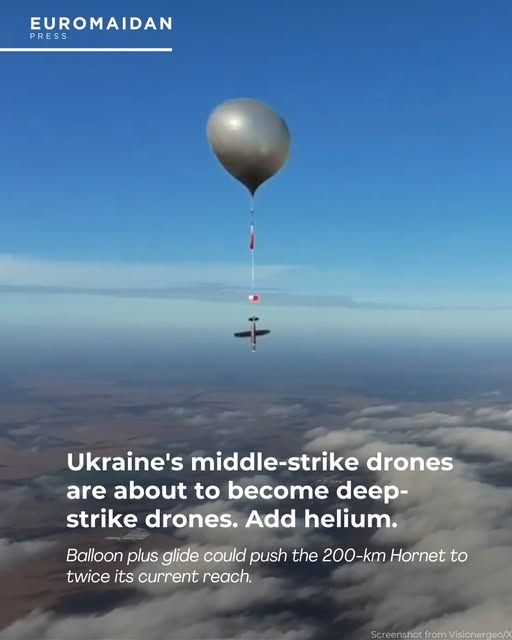
Las fuerzas ucranianas están empleando globos, como aquellos que dieron tanto de hablar cuando llegaron a Estados Unidos, o a Canarias, para diversas operaciones aéreas, como las tradicionales prospecciones meteorológicas. Y, también, para aumentar el alcance de sus drones kamikaze, transportándolos bien dentro de las fronteras rusas.
Ukraine’s Defense Forces are using balloons for a range of air operations. One of them is carrying strike drones deep into the enemy’s operational rear and releasing them close to their targets. Balloons were also recently spotted far behind the front line, in Moscow region. https://t.co/TK43rzAqzj
— Defense of Ukraine (@DefenceU) November 7, 2026
🇺🇸 The U.S. Hornet kamikaze drone has been tested using a balloon-assisted launch system, with the balloon carrying the drone 42 kilometers before releasing it from an altitude of 8 kilometers while using only 5% of its battery. The concept significantly extend the drone’s operational range by combining the balloon’s travel distance, the high-altitude drop, and the battery savings from avoiding powered flight during ascent. Starlink integration would increase the drone’s strike range from roughly 100–120 kilometers to as much as 1.5 to 2 times farther.
— Visioner (@visionergeo) May 20, 2026
El método es simple, y ya se usó en Venecia en agosto de 1849, y los japoneses sobre USA en la IIGM: utilizar globos como vector de ataque, atando al mismo la munición. En el día de hoy, drones de ataque. El inconveniente es que el transporte en globo es lento, y que no es gobernable, y por tanto se depende de las corrientes atmosféricas, en las que se fía el transporte. Aunque, hoy día, se pueden predecir con anticipación. Esto les permite potencialmente alcanzar objetivos situados en la retaguardia del enemigo, aumentando la autonomía del drone, que no tiene que utilizar sus medios hasta estar bien adentro del territorio ruso.
Fuentes: Defence UA, Euromaidan